

Macomb County
Sterling Heights, Michigan commercial real estate
Last updated
What should a buyer know about Sterling Heights first?
Sterling Heights is Macomb County's second-largest city and combines two distinct commercial identities: the M-59 (Hall Road) retail corridor, one of the busiest retail strips in the region, and a deep automotive-industrial base concentrated along Van Dyke Avenue and the Mound Road corridor near the Sterling Heights Assembly Plant. These two halves of the city's economy rarely compete for the same real estate, which gives Sterling Heights a genuinely diversified commercial base compared with more single-use-dominated Macomb County cities.
Market read
Inside the Sterling Heights market
Sterling Heights is Macomb County's second-largest city and combines two distinct commercial identities: the M-59 (Hall Road) retail corridor, one of the busiest retail strips in the region, and a deep automotive-industrial base concentrated along Van Dyke Avenue and the Mound Road corridor near the Sterling Heights Assembly Plant. These two halves of the city's economy rarely compete for the same real estate, which gives Sterling Heights a genuinely diversified commercial base compared with more single-use-dominated Macomb County cities.
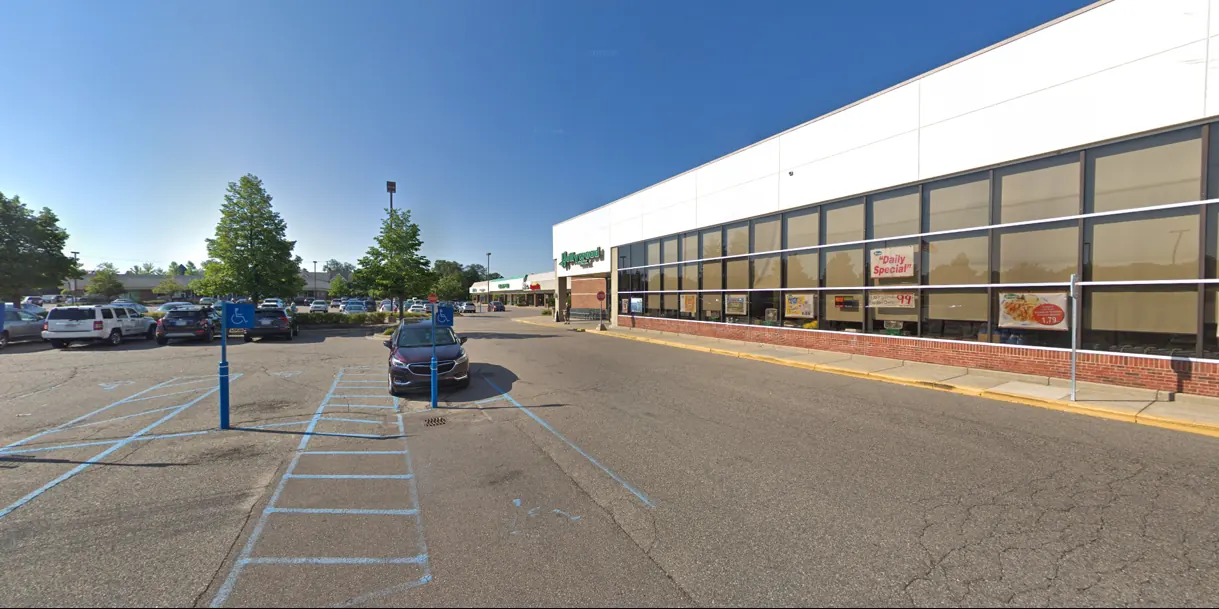
M-59/Hall Road functions as a regional retail draw, with big-box, category-killer and restaurant product lined up along the corridor pulling shoppers from across northern Macomb and southern Oakland counties; it is one of the highest-traffic retail corridors in the state and has continued to see reinvestment even as some national retailers have contracted footprints elsewhere. This corridor is distinct from, and complements, the industrial employment base further south and east in the city.
The Van Dyke and Mound Road industrial corridors host a mix of Tier 1 and Tier 2 automotive suppliers, tool-and-die shops, and modern logistics/flex buildings, reflecting Sterling Heights' long history as a manufacturing center for the Detroit auto industry. Sterling Heights Assembly Plant itself remains a major employment anchor and keeps supplier demand active in the surrounding industrial parks, where a functioning plant of this scale generates a constant, predictable pull for sequenced-delivery suppliers who need to be within a short truck haul of the assembly line.
Building stock along Van Dyke and Mound skews toward an older generation of manufacturing specification: clear heights commonly in the 16- to 22-foot range, smaller and more tightly spaced column bays than a modern speculative building, and dock configurations built for rail-adjacent or cross-dock supplier delivery rather than the deep, high-cube trailer courts favored by contemporary e-commerce distribution. Several parcels along the Mound Road corridor retain rail spurs from an earlier industrial era, though active rail service on individual sites is inconsistent and should be verified rather than assumed. Functional obsolescence in this stock shows up mainly as tight column spacing, lower clear heights and limited trailer storage, all of which matter more to a modern logistics user than to a supplier running sequenced, just-in-time deliveries against the assembly plant.
Power service across the Van Dyke and Mound industrial parks tends to run heavier than typical warehouse stock given the district's manufacturing heritage, which has made a subset of these buildings attractive to users with above-average electrical draw, including some light-manufacturing and processing tenants who would otherwise need to build out service from scratch in newer product. Sterling Heights sits along the M-59/Hall Road corridor, which extends the region's major east-west retail and mixed-use spine toward Rochester Hills and other Oakland County communities to the west, while Van Dyke provides the primary north-south industrial and commercial link toward Warren and Detroit's east side.
For retail investors, Sterling Heights offers some of the strongest fundamentals in Macomb County given Hall Road's traffic counts and tenant depth, while industrial buyers benefit from a stable, if mature, supplier base tied to continued automotive production at the assembly plant. Tenants evaluating the city should treat the retail and industrial submarkets as separate decisions with different demand drivers, and industrial buyers in particular should budget for building upgrades where clear height or dock configuration falls short of what a modern logistics tenant requires.
Submarkets and districts
- M-59/Hall Road retail corridor
- Van Dyke Avenue industrial corridor
- Mound Road industrial belt
- Sterling Heights Assembly Plant district
- Metropolitan Parkway
Employers and tenant anchors
- Sterling Heights Assembly Plant (Stellantis)
- automotive tool-and-die and supplier firms
- Lakeside Mall-area retailers
- Utica Community Schools
- Ascension Macomb-Oakland Hospital
Market data
Sourced and dated figures
We publish only figures that have been published, with the source and effective date attached. We do not estimate city-level vacancy or rent.
Metro Detroit retail market · Q1–Q3 2026
Metro Detroit| Metric | Value | Note |
|---|---|---|
| Total vacancy | ≈5.6% | Heading into Q3 2026 |
| Average asking rent | ≈$17.00 / SF NNN | Q1 2026, against a $25.89 national average |
Source: Metro Detroit retail market reporting, 2026 · Figures as of
Cannabis
Sterling Heights cannabis ordinance
This page covers the market. The ordinance page covers licence caps, buffer and setback rules, social equity status and excise revenue.
Sterling Heights cannabis zoning, licences and real estate →
By property type
Sterling Heights by property type
Only the combinations that carry real market data or real local editorial are published. The matrix fills in as inventory and content arrive.
- Sterling Heights industrial
Sterling Heights pairs a large automotive supplier and defense manufacturing base along Mound Road and Van Dyke with newer flex and distribution buildings near M-59 and I-75.
Inventory
C3 CRE listings in Sterling Heights
No active C3 CRE listing in Sterling Heights today. We transact off-market here regularly — send us your criteria and we will call you before it hits the market.
Questions
Sterling Heights questions
- What is Sterling Heights' main retail corridor?
- M-59, known locally as Hall Road, is one of the busiest retail corridors in the region, lined with big-box, category-killer and restaurant tenants drawing shoppers from northern Macomb and southern Oakland counties.
- What kind of industrial base does Sterling Heights have?
- A long-established automotive manufacturing base along Van Dyke Avenue and the Mound Road corridor, anchored by Sterling Heights Assembly Plant, with a mix of tool-and-die shops, suppliers and modern logistics/flex buildings.
- Is there a cannabis market in Sterling Heights?
- The city's specific ordinance position is covered on its dedicated cannabis municipality page. Prospective operators should verify current zoning allowances directly rather than assume availability based on the retail corridor's overall strength.
- How does Sterling Heights compare to Warren for industrial buyers?
- Both cities share a Van Dyke Avenue industrial spine and automotive-supplier tenant base, but Sterling Heights' industrial demand is more directly tied to the active Assembly Plant, while Warren's is more engineering- and defense-adjacent given the GM Tech Center and TACOM.
Keep going
Related markets
Talk to a broker
Who covers Sterling Heights
Corbin Yaldoo, Founder/President, leads coverage of Sterling Heights. Direct line (248) 220-1110.
- Direct
- (248) 220-1110
- corbin@c3cre.com
- Profile
- Corbin Yaldoo →
Last updated