

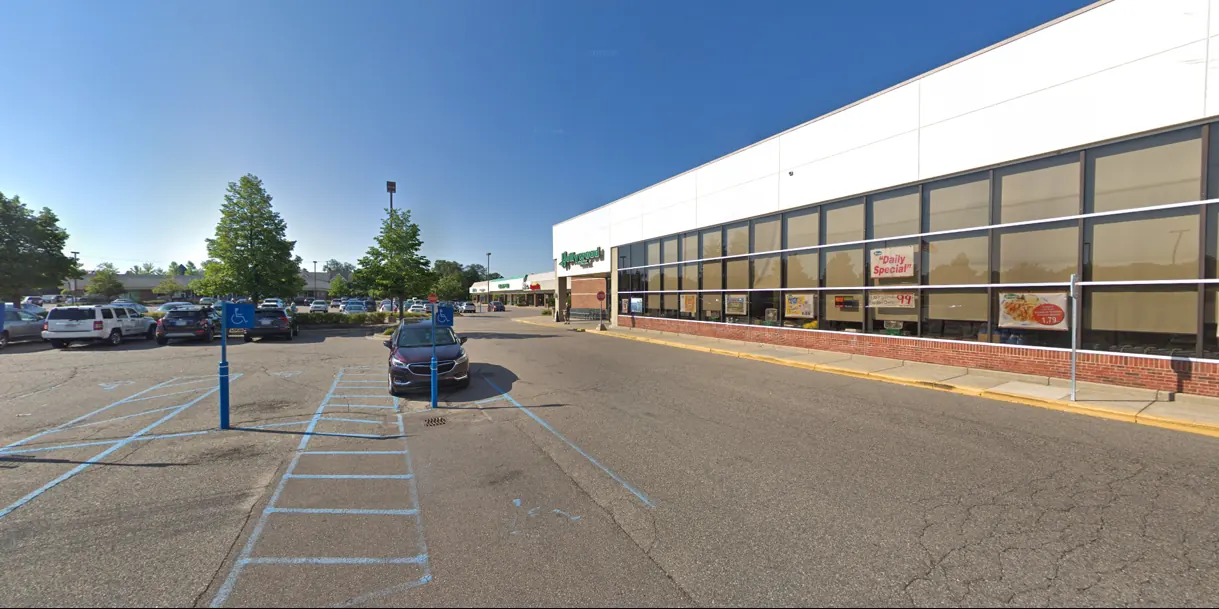
Michigan commercial corridor
Gratiot Avenue
Last updated
Route designation
M-3
Cities covered
3
Corridor character
What Gratiot Avenue is, segment by segment
Gratiot Avenue, M-3, runs diagonally northeast out of downtown Detroit into Macomb County, cutting across the region's standard north-south grid. That diagonal path made it one of the original commercial spines connecting Detroit to its eastern suburbs, and the corridor still carries a working, unglamorous commercial character — auto parts, service retail, light industrial and neighborhood commercial — distinct from Woodward's retail identity or Telegraph's big-box format. The corridor's legacy as a transit-oriented spine is still visible in the density of storefronts that sit close to the sidewalk in the inner-ring segments.
Within Detroit, Gratiot passes through several of the city's eastside neighborhoods and industrial districts, with commercial and light-industrial parcels reflecting decades of incremental development rather than a single planned corridor. As Gratiot crosses into Macomb County, it becomes the primary commercial spine for Eastpointe and Roseville, where the corridor's retail and service base serves the surrounding residential neighborhoods and benefits from Gratiot's continued role as a direct route into Detroit. The stretch through Roseville, particularly near the 12 Mile and 13 Mile intersections, has historically been a hub for automotive-related retail and independent service shops.
Further out, Gratiot continues through the Clinton Township and Mount Clemens area, where the corridor's commercial intensity is shaped by Macomb County's broader industrial and manufacturing base. Here, the street widens and the character shifts toward larger-format retail and sprawl, eventually connecting with the Hall Road (M-59) retail powerhouse. Light-industrial and flex users along this stretch often value Gratiot's connectivity to Detroit and to the region's north-south freeways over any specific interchange, since Gratiot itself functions as a continuous surface-street connector and a reliable truck routing alternative to the often-congested I-94 freeway.
Gratiot's commercial building stock tends to be older than what's found along the region's freeway corridors, and that creates a different investment profile: smaller footprint retail and service buildings, older light-industrial buildings with lower clear heights, and a generally higher proportion of owner-occupied small business real estate relative to institutional-grade product. Redevelopment activity is increasingly common in the Mount Clemens segment, where the city's historic core provides a more walkable context for adaptive reuse projects. That mix makes Gratiot a corridor where local market knowledge about specific block-by-block conditions, including curb-cut access and parking ratios, matters more.
Buyers and tenants considering Gratiot Avenue property should focus on the specific municipality and specific block, since the corridor's character shifts meaningfully between Detroit's eastside, Roseville's retail-anchored stretch, and the more industrial and manufacturing-oriented character further out toward Mount Clemens. Zoning, parking requirements and permitted uses vary by jurisdiction along the way, and older building stock throughout the corridor should be evaluated individually for functional condition, environmental history, and the feasibility of site-plan updates required by modern municipal standards.
Traffic
Annual average daily traffic
Retail and automotive underwriting starts with traffic. We publish MDOT counts, not estimates.
Traffic counts — not yet published
Annual average daily traffic (AADT) counts for Gratiot Avenue are published by MDOT at the individual count-station level. We have not populated this block yet, and we do not publish estimated traffic figures. Segment-level AADT will appear here once pulled from the source below.
MDOT Traffic Monitoring Program (annual average daily traffic) →
Also passes through
- Clinton Township
- Mount Clemens
Questions
Gratiot Avenue questions
- What makes Gratiot Avenue different from Woodward or Telegraph?
- Gratiot runs on a diagonal northeast from Detroit into Macomb County and carries a working commercial and light-industrial character — auto parts, service retail and neighborhood commercial — rather than the retail-anchored identity of Woodward or the big-box format of Telegraph.
- What communities does Gratiot Avenue serve as a commercial corridor?
- Gratiot runs through Detroit's eastside neighborhoods, becomes the primary commercial spine for Roseville, and continues through Eastpointe, Clinton Township and Mount Clemens as it moves deeper into Macomb County.
- Is Gratiot Avenue building stock modern or older?
- Generally older. The corridor's retail, service and light-industrial buildings reflect decades of incremental development rather than planned modern construction, so functional condition should be verified building by building rather than assumed.
- Why do light-industrial tenants use Gratiot Avenue despite it being a surface street?
- Gratiot functions as a continuous connector into Detroit and toward the region's north-south freeways, so tenants value its direct connectivity rather than any single interchange, unlike a freeway corridor where exit proximity drives site selection.
Keep going
Cities and corridors
Talk to a broker
Who covers Gratiot Avenue
Corbin Yaldoo, Founder/President, leads coverage of Gratiot Avenue. Direct line (248) 220-1110.
- Direct
- (248) 220-1110
- corbin@c3cre.com
- Profile
- Corbin Yaldoo →
Last updated