

Michigan commercial corridor
Telegraph Road
Last updated
Route designation
US-24
Cities covered
3
Corridor character
What Telegraph Road is, segment by segment
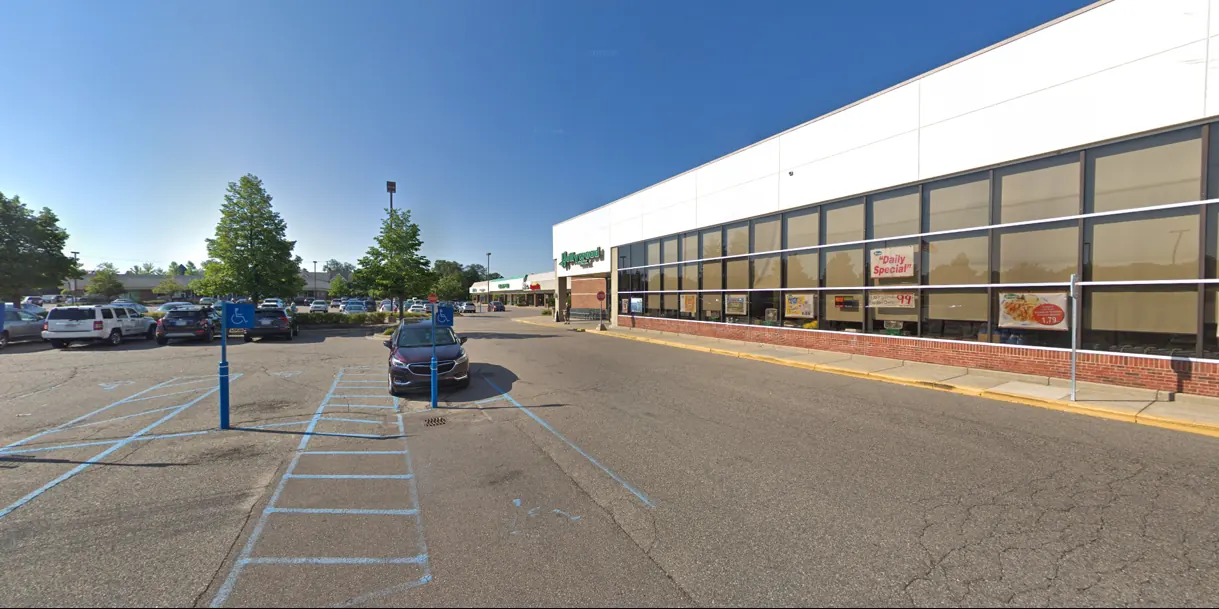
Telegraph Road, US-24, is one of the longest continuous commercial corridors in southeast Michigan, running north-south through Southfield, past Bloomfield Hills, and into Pontiac before continuing toward the region's northern exurbs. Unlike Woodward's walkable downtown character, Telegraph developed as an automobile-oriented commercial strip, built around big-box retail, automotive dealerships and service uses set back from the road behind surface parking, and that built form still defines most of the corridor today. The road's wide right-of-way and high-speed traffic patterns necessitate deep setbacks and large-format signage, shaping the underwriting for retail visibility.
Southfield's Telegraph frontage is the corridor's busiest commercial stretch, anchored historically by big-box and automotive-retail users and benefiting from the city's broader office and business-park base nearby. The corridor's automotive-dealership concentration has been a defining feature for decades, with new and used car dealerships occupying large-format parcels that require specific site characteristics — deep lots, extensive display frontage and service-bay access — that differ meaningfully from standard retail underwriting. Key intersections at 12 Mile and 10 Mile roads serve as the primary retail nodes.
Moving north, Telegraph skirts Bloomfield Hills, where the character shifts abruptly to a more wooded, lower-density commercial profile. Here, the frontage is characterized by professional office buildings and boutique retail that matches the city's affluent residential character. Cross streets like Long Lake and Maple Road mark the transition points into this more exclusive segment. Further north, the corridor enters Pontiac, where the character shifts toward a mix of older strip retail, service commercial and parcels tied into the city's broader redevelopment efforts. Pontiac's Telegraph frontage has seen more turnover and vacancy, creating opportunities for buyers willing to reposition older big-box buildings.
Telegraph's big-box and automotive legacy means the corridor's available building stock skews toward large floor plates that don't always suit smaller retail or restaurant tenants without subdivision. A defining feature of the corridor's access reality is the prevalence of 'Michigan Lefts' — median U-turns that dictate how customers enter and exit sites. Investors and users along the corridor frequently face a choice between leasing to a large-format user who fits the existing building footprint, or investing in demising and site work to attract multiple smaller tenants — a calculation that varies significantly by municipality.
Because Telegraph runs through several municipalities with different zoning frameworks and different levels of investment in corridor redevelopment, buyers should treat each city's stretch as its own submarket rather than assuming corridor-wide consistency. Southfield's stretch benefits from proximity to the city's office base and continued dealership demand; Pontiac's stretch requires more careful underwriting of surrounding vacancy and redevelopment timing; and the Bloomfield Hills segment is comparatively limited in commercial intensity given the city's lower-density character. Site-plan review in these jurisdictions often focuses on curb-cut consolidation and landscape buffering.
Traffic
Annual average daily traffic
Retail and automotive underwriting starts with traffic. We publish MDOT counts, not estimates.
Traffic counts — not yet published
Annual average daily traffic (AADT) counts for Telegraph Road are published by MDOT at the individual count-station level. We have not populated this block yet, and we do not publish estimated traffic figures. Segment-level AADT will appear here once pulled from the source below.
MDOT Traffic Monitoring Program (annual average daily traffic) →
Also passes through
- Bloomfield Township
- Waterford Township
Questions
Telegraph Road questions
- What kind of commercial development is typical along Telegraph Road?
- Telegraph developed as an automobile-oriented corridor, dominated by big-box retail, automotive dealerships and service uses set behind surface parking, in contrast to the walkable downtown character of a corridor like Woodward.
- Why is automotive dealership use so concentrated on Telegraph?
- Dealerships require large, deep parcels with extensive display frontage and service-bay access, and Telegraph's wide right-of-way and auto-oriented development pattern have made it the preferred address for that use type for decades, particularly through Southfield.
- How does Pontiac's Telegraph frontage differ from Southfield's?
- Pontiac's stretch has seen more vacancy and turnover, reflecting the city's longer-term economic transition, while Southfield's stretch benefits from proximity to a strong office base and continued dealership demand. Buyers should underwrite each city's segment separately.
- Is Telegraph Road retail easy to subdivide for smaller tenants?
- Not always. Much of the existing building stock has large floor plates built for big-box or automotive users, so attracting smaller retail or restaurant tenants often requires demising work and site modifications rather than simple lease-up.
Keep going
Cities and corridors
Talk to a broker
Who covers Telegraph Road
Corbin Yaldoo, Founder/President, leads coverage of Telegraph Road. Direct line (248) 220-1110.
- Direct
- (248) 220-1110
- corbin@c3cre.com
- Profile
- Corbin Yaldoo →
Last updated