Macomb County is where southeast Michigan still makes things. The industrial base runs north from Detroit's edge through Warren, Center Line, Sterling Heights, Utica and Shelby Township along three parallel arterials — Van Dyke, Mound Road and Gratiot Avenue — and it is dominated by stamping, tooling, machining, defence work and tier-one and tier-two automotive supply. The county holds the largest concentration of manufacturing employment in Michigan, and the buildings reflect that history: heavy power, crane bays, pits, reinforced floors and a great deal of 1950s to 1970s vintage stock. Sterling Heights alone carries one of the densest concentrations of small and mid-size manufacturing buildings in the state, many still occupied by the founding family or the second generation of it, which produces a steady but uneven flow of owner-user sale listings rather than a liquid institutional market.
That vintage is the underwriting story. A large share of Macomb industrial inventory has clear heights in the eighteen to twenty-four foot range, which serves manufacturing well and modern distribution poorly. Buyers converting a manufacturing building to warehouse or logistics use need to price the gap: dock configuration, column spacing, floor thickness, and the cost of removing legacy process infrastructure such as pits, cranes and process piping. Owner-users, by contrast, keep bidding this stock aggressively because the power service and the floor loading are expensive to replicate, and a three-phase service with several thousand amps of capacity is worth real money to a metal-forming or plating tenant even in a building that would never suit a national logistics user.
Office in Macomb is a distinctly secondary product type, mostly small-bay professional and medical buildings along Hall Road, Fourteen Mile and the Van Dyke frontage rather than a distinct downtown or towers market. Sterling Heights City Center is the closest thing the county has to a mixed-use office node, and it functions more as a municipal and retail anchor than as a competitive Class A submarket. Buyers looking for office exposure in Macomb are generally better served underwriting medical or dental condo product than speculative multi-tenant buildings.
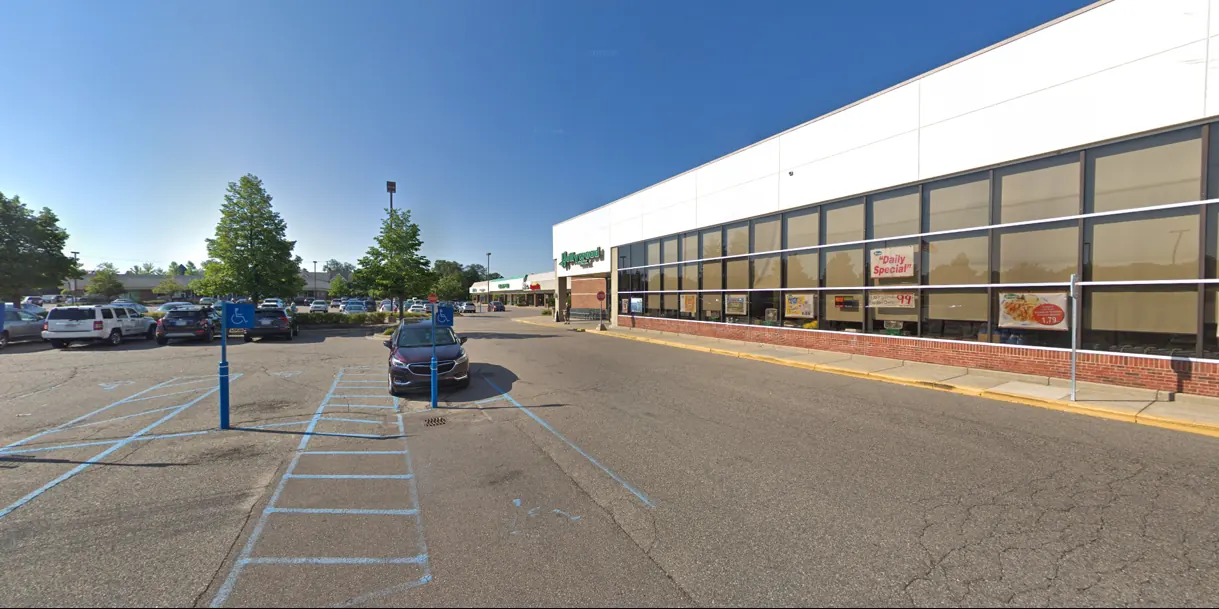
Retail in Macomb is arterial and volume-driven rather than district-based. M-59 through Sterling Heights and Utica is the county's dominant retail corridor, anchored by big-box and power-centre product, with Gratiot and Van Dyke carrying strong secondary trade. The county's east side, from Roseville and Eastpointe up through Clinton Township, has an older retail stock where repositioning and repurposing of vacant big-box space has been the main source of activity, and outlot pad sites along Gratiot continue to trade well to net-lease buyers because traffic counts there have stayed high even as some anchor tenancy has churned.
On cannabis, Macomb is fragmented. Warren, Center Line and Eastpointe have opted in and have licensed operators; Sterling Heights and Clinton Township have opted out. Warren's ordinance in particular has a litigation history — Pinebrook Warren v. City of Warren — that shaped how Michigan municipalities run competitive scoring processes statewide. Operators looking at Macomb should read the ordinance page for a specific municipality before touring buildings, because the county's opt-in map does not follow its industrial map, and a building that looks perfect for cultivation on paper can sit one parcel outside an eligible zoning overlay.
Macomb rewards buyers who can move quickly on functional industrial and who understand what a manufacturing building actually costs to convert. It is also the county where our receivership and distressed practice sees the steadiest flow, because supplier concentration means an individual tenant failure — a lost contract, a shifted sourcing decision — can put a good building on the market fast. A buyer underwriting Macomb industrial should always confirm current environmental status, since decades of metal finishing and machining leave a real number of properties with open or historical file numbers at EGLE that affect financing timelines even when the operating history was clean.