Ingham County's commercial market runs on institutions. State government occupies a very large share of the office inventory in and around downtown Lansing, Michigan State University anchors East Lansing and drives a research and student-serving economy of its own, and Sparrow and McLaren support a substantial healthcare employment base. The result is a market whose demand is less cyclical than the rest of Michigan's and whose largest tenant decisions are made on a political and budget calendar rather than a commercial one.
That institutional weight cuts both ways for office investors. State leasing provides credit and duration, but consolidation decisions can vacate large blocks quickly, and the county's older downtown office stock competes against suburban product in Delta Township and along the I-96 and US-127 corridors that is cheaper to occupy and easier to park. Underwriting Lansing office means underwriting a specific tenant's specific commitment, not a market average.
Industrial in the county is moderate in scale and practical in character: light manufacturing, distribution serving mid-Michigan, and supplier space tied to the region's remaining automotive assembly. The I-96, I-69 and US-127 interchanges hold most of the newer product, and Lansing's older industrial corridors hold the affordable stock. Because the county sits at the crossroads of three interstates, regional distribution users get better coverage of the Michigan market from here than from anywhere else in the state.
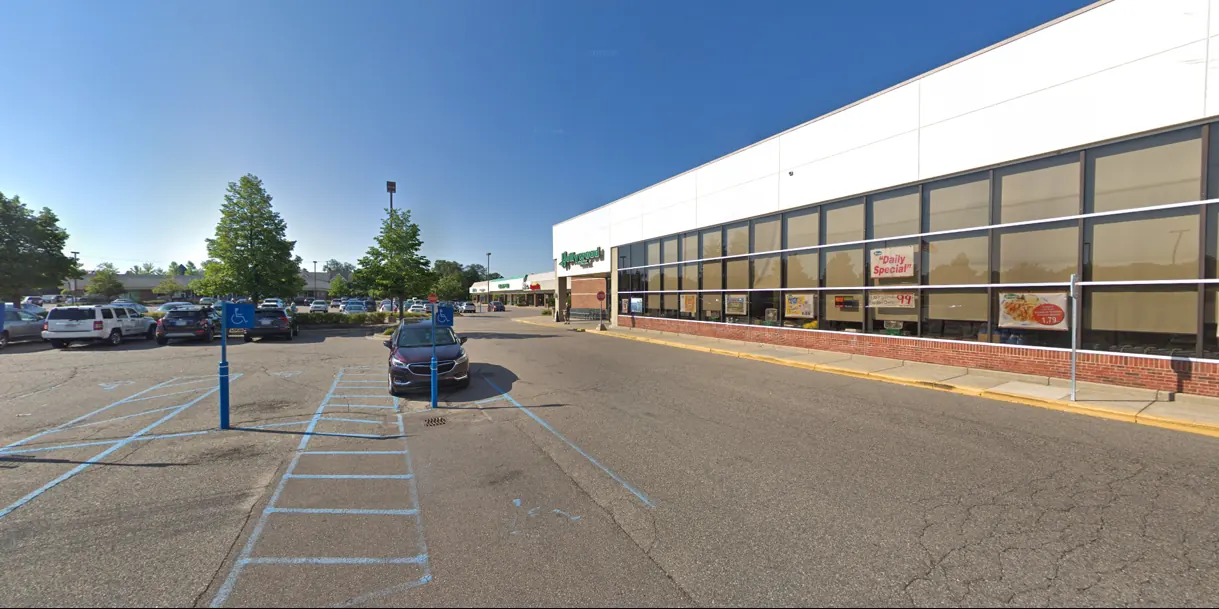
Retail concentrates on the Lansing–Delta Township corridor, the Frandor and Grand River Avenue trade areas near campus, and the Okemos and Meridian Township corridors that serve the county's highest-income households. East Lansing's Grand River frontage is a distinct market with student-driven demand patterns and its own turnover rhythm.
Lansing and East Lansing both permit adult-use cannabis establishments and both have ordinance terms that matter to operators — Lansing with defined operating hours and East Lansing with a required donation of a percentage of profits. For any user, the county rewards buyers who understand institutional demand: check who actually occupies the building, on what term, and what happens to the asset if that occupier consolidates.
Downtown Lansing's building stock is a mix of mid-century state office towers, several of which the state has consolidated out of over the past decade, and older commercial buildings that predate the capitol complex's expansion. That consolidation has produced a genuine adaptive-reuse pipeline: former state office buildings have been converted to market-rate residential and hotel use, aided by the same historic and brownfield tax credit tools used in Detroit and Grand Rapids, and a buyer evaluating a vacant or partially vacant downtown Lansing office building should assume residential conversion is a live alternative to re-leasing, not a last resort.
East Lansing's commercial character is inseparable from Michigan State University's academic calendar. Grand River Avenue's retail base turns over on a rhythm tied to enrolment and student housing cycles rather than to conventional retail trade-area economics, and ground-floor space along that corridor commands rents that reflect foot traffic volume during the school year rather than trailing-twelve-month sales performance the way a suburban shopping centre would be underwritten. Investors accustomed to conventional retail metrics should adjust their assumptions accordingly before pricing anything on that frontage.
Industrial users drawn to the I-96, I-69 and US-127 interchange should also weigh the county's remaining automotive assembly presence, which still generates supplier and logistics demand even as the broader Michigan manufacturing footprint has contracted. That supplier base tends to occupy older, smaller buildings on the city's south and east sides rather than the newer interchange product, so the two industrial submarkets — legacy supplier space and newer interchange distribution — should be evaluated separately rather than as a single countywide industrial market.