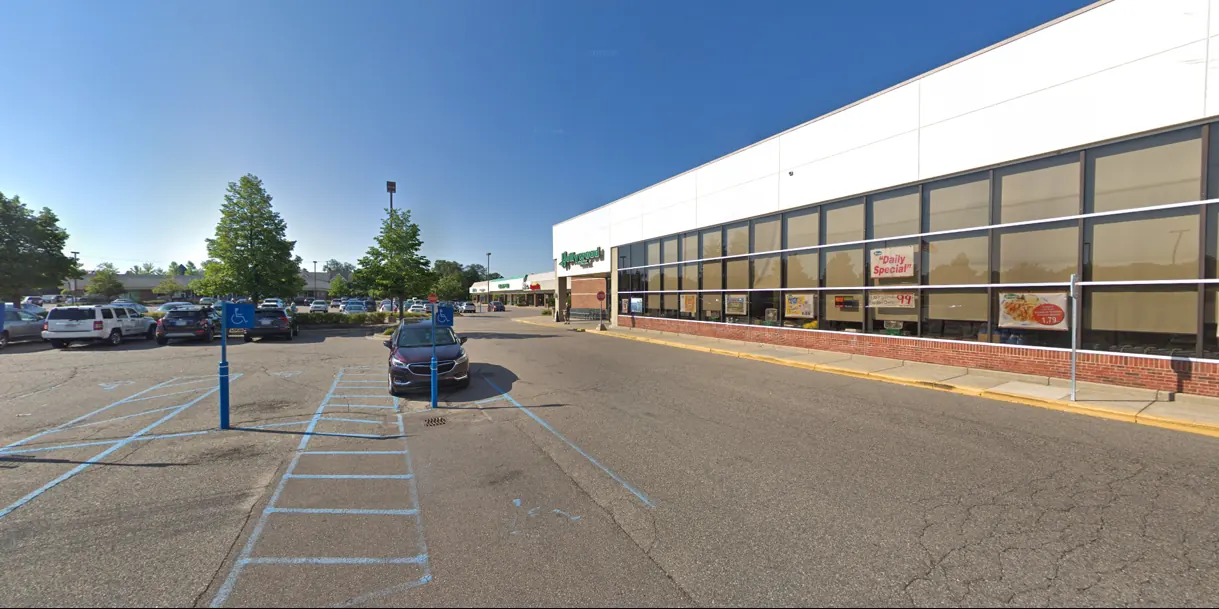
Bloomfield Hills is one of the smallest cities by land area in Oakland County but carries an outsized profile because of its concentration of law firms, private banks, wealth advisors and specialty medical practices. Commercial space here is almost entirely low-rise office and medical office, much of it built to a campus or estate-like standard along Woodward Avenue and the side roads that branch off it, including Long Lake, Square Lake and Telegraph.
The Woodward corridor through Bloomfield Hills carries some of the more architecturally distinctive office buildings in the region, several set behind mature landscaping with limited street-facing signage, a pattern that reflects the city's zoning preference for low-intensity, low-visibility commercial uses rather than big-box retail or highway-oriented development. Cranbrook Educational Community anchors the northeast side of the city and shapes both the built environment and the buyer pool, since institutional and nonprofit users are a real part of the demand base here alongside private practices.
Retail in Bloomfield Hills is limited and boutique, oriented to residents rather than regional draw; larger-format retail demand spills into neighboring Troy and Birmingham, both a short drive down Woodward or Telegraph. Because there is essentially no industrial or warehouse product within city limits, tenants and investors who need that space look toward Auburn Hills, Pontiac or the Troy/Rochester Hills industrial pockets instead. This narrows the addressable inventory for anyone searching Bloomfield Hills specifically to office, medical office and a handful of special-purpose parcels.
C3 CRE maintains its own headquarters in the heart of this market at Woodward Crossings, 36800 Woodward Ave Suite 301. This location provides a vantage point over the Woodward corridor's unique dynamics, where the 'Bloomfield Hills' address provides significant brand equity for professional services firms. The building stock along Woodward and the Telegraph Road corridor is characterized by high-quality masonry and glass finishes, often with parking ratios that exceed those of more urbanized cores, catering to an executive and client-base that prioritizes ease of access and privacy. The Woodward and Long Lake intersection, along with the Square Lake interchange, serve as the primary commercial nodes, hosting a blend of high-end office suites and specialty medical facilities that benefit from the proximity to regional hospital systems.
Municipal review in Bloomfield Hills is notoriously detail-oriented, with a heavy emphasis on architectural character, signage aesthetics, and landscape preservation. This creates a high barrier to entry and ensures that the city's commercial corridors maintain a cohesive, high-end feel. For a buyer or developer, this means underwriting a longer entitlement period and higher-than-average site improvement costs, but the trade-off is a market with extremely limited supply and a stable, high-credit tenant base. Real estate here is often a long-term hold, favored by private families and institutional investors who value wealth preservation and prestigious placement over aggressive near-term yield.
Buyers considering Bloomfield Hills should expect a market defined by scarcity rather than volume: few transactions occur in a given year, pricing reflects the affluent residential base surrounding the commercial nodes, and municipal review tends to be detail-oriented given the city's emphasis on architectural character. That combination rewards patient, well-capitalized buyers over opportunistic ones. For tenants, the calculus is about client-facing prestige and proximity to the Woodward corridor's professional and medical ecosystem rather than square footage economics.
Cannabis retail is not part of the commercial landscape in Bloomfield Hills; the municipality's ordinance position is covered on the dedicated cannabis page, and prospective operators should look to neighboring communities with active licensing frameworks rather than expect adult-use retail siting here.