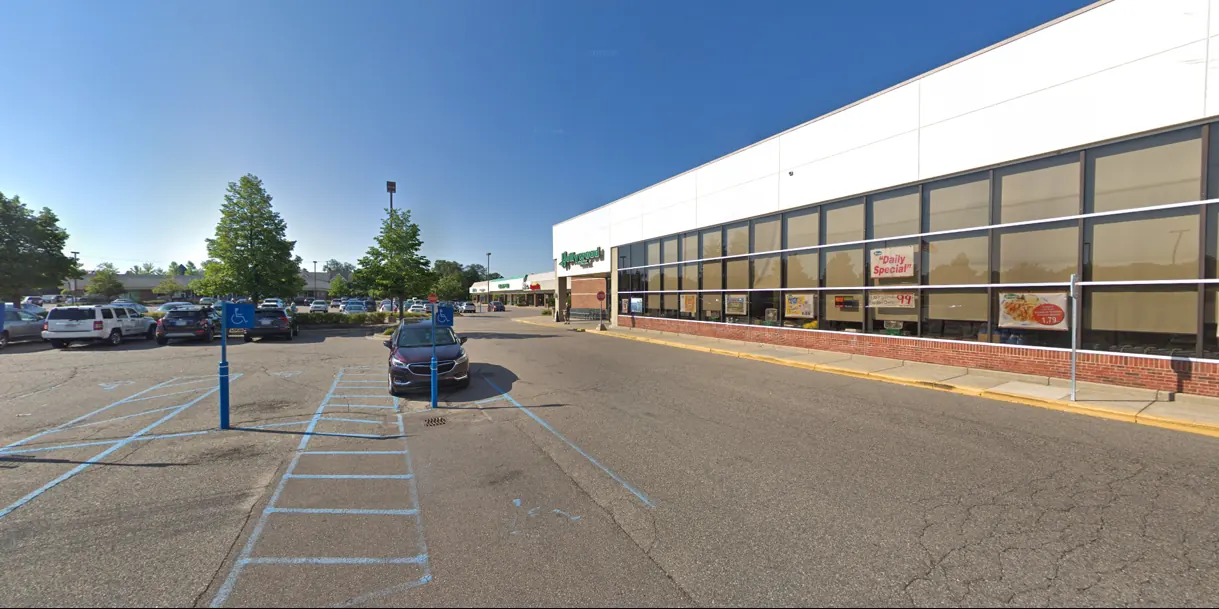
Hartland Township sits at the intersection of US-23 and M-59, a location that has made it a natural freeway-retail and service-commercial node for Livingston County, positioned roughly between the Detroit metro area to the southeast and the Flint and Lansing areas to the north and west. Commercial development here has followed the interchange pattern typical of exurban Michigan townships: gas stations, quick-service restaurants, hotels and service retail clustered near the US-23 ramps, with more conventional retail and light-industrial uses spread along M-59 further from the interchange itself. This strategic positioning makes Hartland a primary stop for travelers and a convenient service hub for the surrounding rural and residential communities.
M-59 functions as Hartland's primary east-west commercial corridor, connecting the township toward Fenton and the Genesee County line to the west and toward Oakland County's Milford and Highland Township area to the east. The Hartland Towne Center and the commercial nodes near Settlers Park host a variety of national and regional retailers, providing a level of amenity that is high for an exurban market. The character of the corridor is transitioning from purely rural-commercial to a more structured, exurban retail environment, with newer developments emphasizing better aesthetics and site planning.
Hartland's commercial base is smaller in scale than the suburban Oakland and Macomb County markets, reflecting the township's more rural and residential character, but the US-23/M-59 interchange gives it a genuine locational advantage. Light-industrial and flex space in Hartland tends to be smaller-format and newer than the legacy industrial stock found in older Wayne, Oakland and Macomb County cities, serving contractors, trades businesses and small manufacturers. These buildings are often occupied by owner-users or local service providers who need a central location to serve Livingston and western Oakland counties.
Underwriting in Hartland requires a specific focus on utility infrastructure, as many commercial parcels outside the primary interchange area may still rely on septic systems or private wells, though municipal sewer and water have expanded to cover the main commercial nodes. This 'rural-to-suburban' transition is a key dynamic for investors to understand. Tenant profiles are generally stable, consisting of regional service firms, specialized medical offices, and community-oriented retail. The township's zoning is designed to maintain a 'small-town' feel while accommodating necessary commercial growth, which often results in more deliberate and sometimes slower entitlement processes for larger projects.
For buyers and tenants, Hartland offers a genuinely different profile than the denser suburban Detroit markets: lower pricing, less competition for available space, and a freeway-interchange location that supports steady, if modest, service-retail and light-industrial demand. It is best suited to businesses whose customer base or operations are naturally regional rather than those requiring dense local population support. The market for land is also active, as developers look for well-positioned parcels that can support the next phase of retail or professional office expansion.
Redevelopment is less common here than in the older urban cores, but there is a steady trend of 'infill' development as the gaps between existing commercial buildings are filled with newer, higher-quality product. Investors should look at the quality of the US-23 access and the visibility from M-59, as these are the primary drivers of value. The township's master plan prioritizes the concentration of commercial use around the existing interchanges, which protects the value of existing assets by limiting competing development in more rural areas.
What a buyer should underwrite is the continued residential growth in the surrounding township and its impact on retail and service demand. Hartland is increasingly seen as a desirable 'bedroom community' with its own commercial core, and properties that cater to this local population—such as childcare, medical, and neighborhood retail—are particularly well-positioned for long-term stability. The municipal government is professional and focused on orderly growth, providing a predictable environment for those willing to work within the township's established planning framework.